– Software: the Driving Force of the Auto Industry –
Code on Wheels: How Software Became the Driving Force of the Auto Industry
For generations, the automobile was defined by its hardware – the roar of the engine, the gleam of chrome, the precision of its mechanical parts. Today, however, the true horsepower lies not under the hood, but within the lines of code that power every facet of a modern vehicle. Software has transitioned from a mere accessory to the central nervous system of the automotive industry, dictating everything from performance and safety to user experience and brand loyalty. As autonomous vehicles inch closer to reality and cybersecurity threats escalate, the importance of robust, intelligent, and secure software is paramount, transforming cars into sophisticated, connected computers on wheels.
The Invisible Engine: Statistics That Prove Software’s Reign
The influence of software is no longer anecdotal; it’s a measurable, strategic imperative:
-
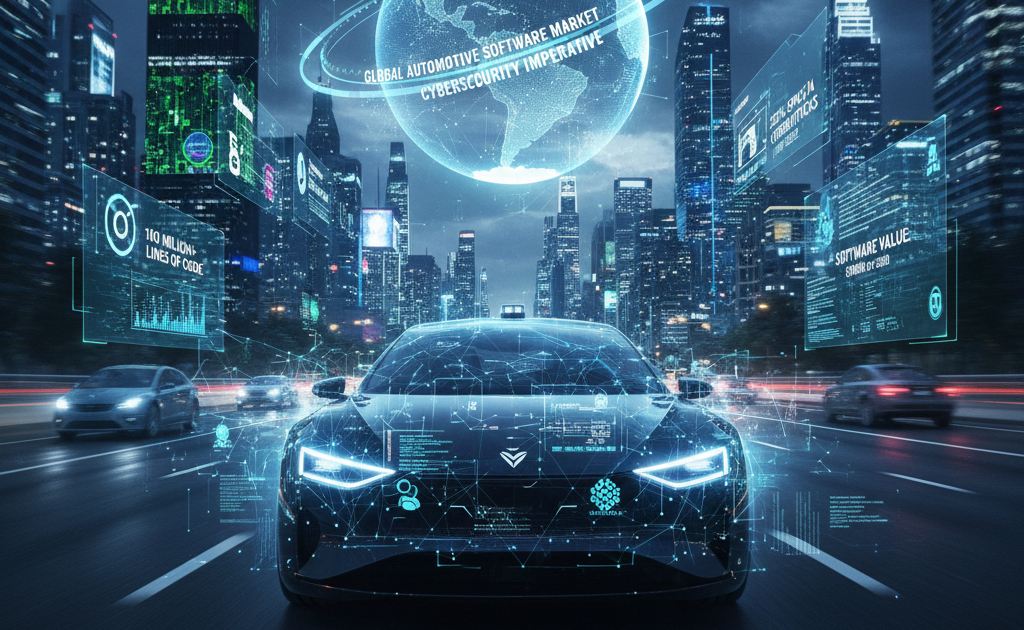
Software’s Growing Value: The market value of automotive software is projected to reach over $100 billion by 2030, a significant leap from previous decades, indicating its increasing economic importance.
-
Lines of Code Explode: A premium car today can contain over 100 million lines of code, dwarfing the complexity of early space shuttles. Autonomous vehicles are expected to push this well into the billions of lines, highlighting the immense programming effort involved.
-
Software-Defined Features: Over 90% of automotive innovations are now software-driven, including advancements in infotainment, advanced driver-assistance systems (ADAS), electric powertrains, and autonomous capabilities.
-
OTA Updates Revolution: The ability to deliver Over-The-Air (OTA) software updates, pioneered by companies like Tesla, is becoming a standard expectation. This allows for continuous improvement, bug fixes, and new feature rollouts, enhancing vehicle longevity and customer satisfaction without a trip to the dealership.
-
Cybersecurity Incidents Surge: With increased connectivity, cybersecurity incidents in the automotive sector have risen dramatically. Reports indicate a staggering 225% increase in automotive cyberattacks between 2019 and 2022, underscoring the urgent need for robust security measures.
Autonomous Vehicles: A Software Symphony on Wheels
The dream of self-driving cars is entirely dependent on sophisticated software. Achieving Level 4 and Level 5 autonomy requires:
-
Sensor Fusion Algorithms: Software must flawlessly integrate and interpret data from an array of sensors – cameras, radar, lidar, ultrasonic – to create a real-time, 360-degree understanding of the vehicle’s environment.
-
Path Planning and Decision Making: Complex algorithms predict the movement of other vehicles and pedestrians, plan optimal routes, and make instantaneous decisions to navigate safely and efficiently.
-
Machine Learning and AI: Autonomous systems learn and improve from vast amounts of driving data, continually refining their ability to handle diverse scenarios, weather conditions, and unexpected events.
-
Redundancy and Fail-Safes: Critical software systems must have built-in redundancies and fail-safe protocols to ensure vehicle control and occupant safety even in the event of a malfunction.
The development of these intricate software stacks is arguably the biggest hurdle to widespread autonomous adoption, demanding billions in investment and the brightest minds in computer science.
The Cybersecurity Imperative: Protecting the Connected Car
As cars become more connected and autonomous, they also become more vulnerable targets for cyberattacks. The implications of a compromised vehicle are far-reaching:
-
Safety Risks: A hacker gaining control of a vehicle’s steering, brakes, or acceleration could lead to catastrophic accidents, jeopardizing lives.
-
Data Breaches: Connected cars collect vast amounts of personal data – driving habits, location, infotainment preferences – which could be stolen and misused.
-
Privacy Concerns: The constant flow of data raises significant privacy questions, requiring robust encryption and data protection protocols.
-
Reputational and Financial Damage: A successful cyberattack could severely damage an automaker’s brand reputation, lead to costly recalls, and result in massive financial penalties.
Automakers are responding by investing heavily in cybersecurity talent, secure coding practices, intrusion detection systems, and partnerships with cybersecurity firms. The battle for automotive cybersecurity is a continuous arms race, demanding constant vigilance and innovation.
The Future is Software-Defined
The automobile industry is no longer just manufacturing vehicles; it’s developing sophisticated mobile platforms. The future car will be deeply integrated into our digital lives, constantly updating, learning, and adapting. Software will not only define how a car drives but also how it interacts with its occupants, its environment, and the broader digital ecosystem. Companies that master software development, prioritize cybersecurity, and seamlessly integrate digital experiences will be the true winners in this brave new automotive world. The road ahead is paved with code, and only those who can write it best will drive the future.