The Electric Revolution: Charting the Global Future of Electric Vehicles
The hum of an electric motor is steadily replacing the roar of the internal combustion engine, signaling a seismic shift in the automotive landscape. Electric Vehicles (EVs), once a niche product, are now at the forefront of a global transportation revolution, driven by environmental urgency, technological innovation, and evolving consumer preferences. The future isn’t just electric; it’s here, and it’s accelerating at an unprecedented pace.
A Surge in Adoption: The Current Landscape
The statistics paint a vivid picture of rapid growth. In 2023, global EV sales surpassed 14 million, marking a significant increase from previous years. China leads the charge, accounting for roughly 60% of new EV registrations worldwide. Europe and North America are also witnessing robust growth, with a growing number of countries setting ambitious targets for phasing out gasoline and diesel car sales. Norway, for instance, has seen EV sales consistently exceed 80% of all new car sales, demonstrating the potential for near-complete market transformation.
Driving Forces: Why the Acceleration?
Several key factors are propelling this electric surge:
-
Environmental Imperative: Governments and consumers alike are increasingly aware of the climate crisis. EVs offer a tangible solution to reduce tailpipe emissions, improve air quality, and combat climate change.
-
Technological Advancements: Battery technology continues to evolve, leading to increased range, faster charging times, and reduced costs. The average range of new EVs now easily surpasses 250 miles, alleviating range anxiety for many.
-
Policy Support: Tax incentives, subsidies, charging infrastructure investments, and stringent emission regulations are critical enablers. Nations are committing billions to build out charging networks, making EV ownership more practical.
-
Falling Costs: While initial purchase prices can still be higher, the total cost of ownership for EVs is becoming increasingly competitive due to lower fuel (electricity) costs and reduced maintenance requirements.
The Road Ahead: Future Forecasts
Forecasting the future of EVs is a dynamic exercise, but the trajectory is clear: exponential growth.
-
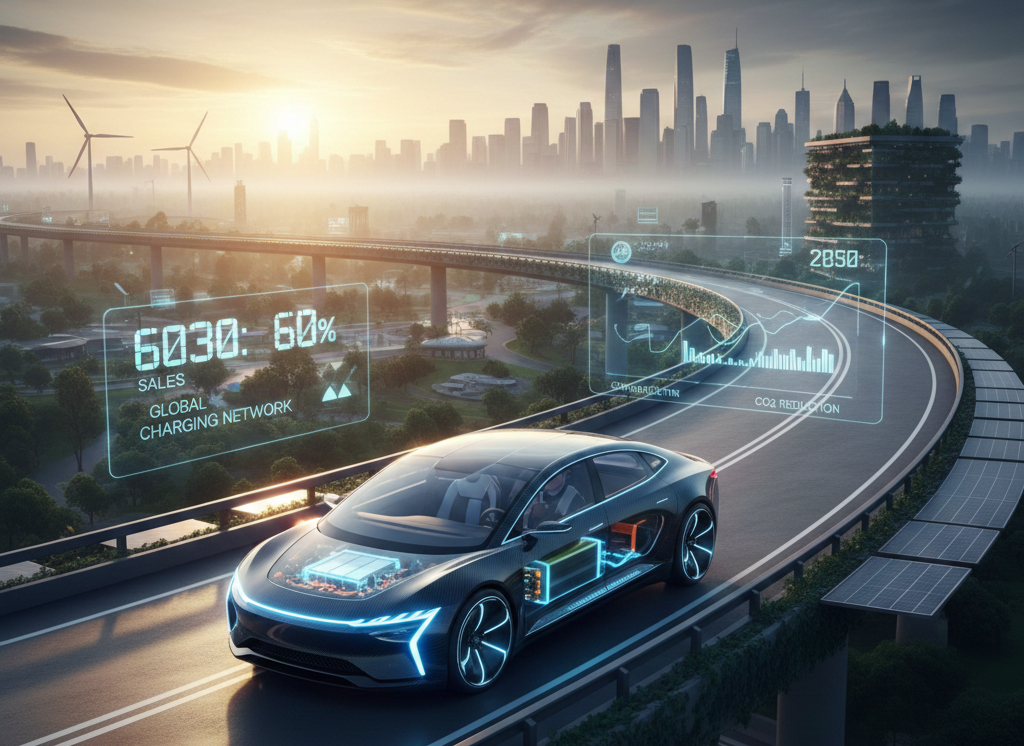
Market Dominance: The International Energy Agency (IEA) projects that by 2030, EVs could account for more than 60% of new car sales globally. Some more optimistic forecasts even suggest this figure could reach 70-80% in leading markets.
-
Battery Innovations: We can expect continued breakthroughs in battery chemistry (e.g., solid-state batteries), leading to even higher energy density, quicker charging, and potentially even longer lifespans. This will further reduce weight and cost.
-
Charging Infrastructure Boom: The next decade will see a massive expansion of charging infrastructure, including ultra-fast chargers on major highways, smart charging solutions for homes, and integrated charging within urban planning. Companies like Electrify America and IONITY are already making significant inroads.
-
New Business Models: We’ll likely see the rise of innovative business models, such as battery-as-a-service, subscription models for vehicles, and vehicle-to-grid (V2G) technology, allowing EVs to feed power back into the grid during peak demand.
-
Autonomous Electric Fleets: The convergence of autonomous driving technology with electric propulsion will pave the way for self-driving electric taxi fleets and delivery services, particularly in urban environments, further optimizing efficiency and reducing congestion.
Challenges on the Horizon
Despite the bright outlook, challenges remain. The sourcing of critical minerals for batteries (lithium, cobalt, nickel) requires sustainable and ethical solutions. Grid infrastructure will need significant upgrades to handle increased electricity demand. Furthermore, ensuring equitable access to charging and affordable EVs across all socioeconomic strata will be crucial for a truly inclusive transition.
Conclusion: An Electrifying Future
The global electric vehicle market is not just expanding; it’s redefining transportation. From bustling cityscapes to vast highways, the silent, powerful presence of EVs will become increasingly ubiquitous. With continued innovation, robust policy support, and a collective commitment to sustainability, the electric revolution promises a cleaner, more efficient, and ultimately, a more sustainable future for mobility. The journey has just begun, and it’s electrifying.